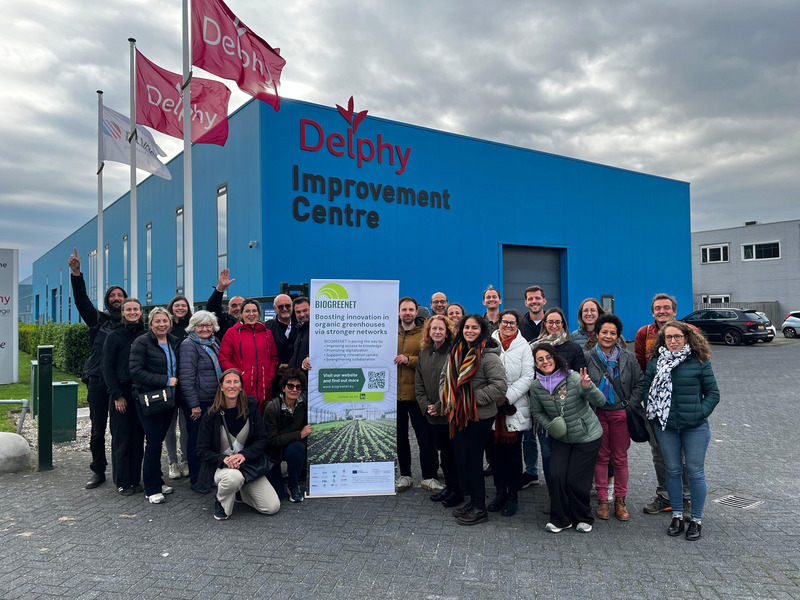

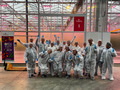
On 20–21 October, BIOGREENET project partners came together in Bleiswijk, the Netherlands, for the annual General Assembly to review the first year of implementation and prepare for the next stage of the project.
The meeting offered partners an opportunity to exchange results, achievements and practical experience across the different work packages. It also created space for an open discussion about the challenges encountered during the year.
During the first year, the project made important progress in building local organic greenhouse production networks and collecting practical and published knowledge. Nearly 1'000 literature references were gathered, providing a strong evidence base for organic greenhouse production and organic conversion. Partners also advanced on stakeholder mapping, interviews, evaluation methods and local workshops. Work has already started on turning this knowledge into practical resources for growers and advisers.
The General Assembly also focused on knowledge exchange and communication. Two exchange events have already been completed, while an online forum is being prepared to support further cooperation – it will be launched in November 2026. Partners agreed to contribute more regularly to project communication channels, improve the recording of dissemination activities and strengthen the collection of evidence for project indicators.
Looking ahead, the second project year will focus on completing outstanding inputs, organizing workshops to identify local greenhouse growing needs, preparing for the first project review, evaluating the collected knowledge and producing practical materials for the organic greenhouse sector. Further priorities include developing the online forum, organising knowledge-exchange activities, strengthening local networks and preparing project reports.
The General Assembly confirmed the value of regular and open exchange among partners. By reviewing both achievements and concerns, the consortium established a clearer shared direction for the coming year and reinforced its commitment to delivering useful, evidence-based knowledge for organic greenhouse production.
Visits to local greenhouse facilities
As part of the General Assembly programme, BIOGREENET partners and the coordination team visited two nearby greenhouse facilities: Frank de Koning and the Delphy Improvement Centre. These visits brought the meeting discussions to life. They gave participants a closer look at commercial biodynamic production and applied greenhouse research, as well as practical insight into organic greenhouse production in the Netherlands: its progress, everyday operations and key challenges.
Frank de Koning
Frank de Koning is a modern biodynamic greenhouse business operating across four locations in Brielle and Tinte. Partners were shown around by Edward de Koning, son of Frank de Koning. The greenhouses cover around 11 hectares, with plans to expand by another 3 hectares. The main crops are peppers, tomatoes, cucumbers and aubergines.
The business originally used conventional production methods but converted to organic production in 2000 to improve product quality and taste. It is now Demeter-certified and is one of the largest biodynamic greenhouse businesses in the Netherlands.
Its biodynamic approach focuses on healthy soil, biodiversity, natural processes and efficient nutrient use. Crops are grown directly in the soil rather than on artificial substrates, which supports strong plants and natural resilience against pests and diseases.
Compost is applied at the start of each crop, and chicken manure provides additional nutrients during the growing season. To tackle soil-borne diseases such as Verticillium in pepper, a specific soil treatment is applied before planting, which has strongly reduced plant losses.
Three of the four locations are heated mainly with geothermal energy, supplemented by a combined heat and power (CHP) unit in spring and autumn; the fourth location runs on CHP. Drip irrigation delivers water and nutrients directly to the roots, while overhead irrigation helps maintain balanced soil moisture.
Pests and diseases are managed without chemical plant-protection products. The greenhouses rely on natural enemies, crop combinations and other biological methods, although Verticillium and nematodes remain significant challenges. Crop diversity supports this strategy: aubergines, for example, provide a habitat for beneficial insects. Flower strips and trees were used around the greenhouses to support biodiversity but were removed last year after high pressure from the southern green stink bug (Nezara viridula).
The visit also showed the economic pressures of intensive greenhouse production. Labour accounts for around 40% of total production costs, and young plants are another major expense. Together with ongoing pest-management challenges, these costs underline the need to balance environmental goals with the practical realities of commercial production.
Delphy Improvement Centre
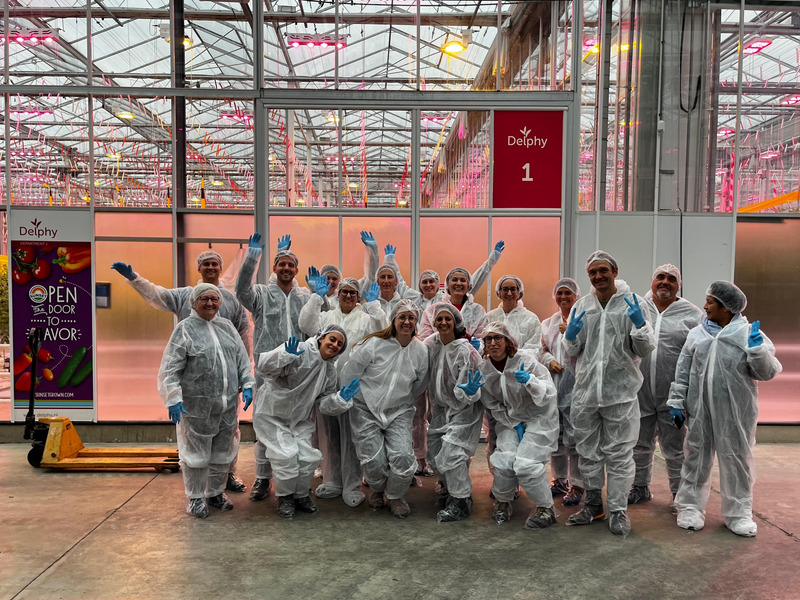
The programme also included a visit to the Delphy Improvement Centre in Bleiswijk, run by BIOGREENET partner Delphy, an applied research centre for greenhouse horticulture and indoor farming. The centre provides a practical setting where researchers, advisers and growers work together on new cultivation methods and technologies.
Its greenhouse facilities and indoor growing systems make it possible to test ideas under controlled but realistic conditions before they are introduced into commercial production. The work covers crop optimisation, energy-efficient lighting and climate control, digital tools, plant health and more resilient cultivation.
A soil-based trial for organic growers, with cucumber and tomato, is planned for 2027 and 2028. It will bring applied research at the centre even closer to the questions of organic greenhouse growers.
Delphy combines applied research with advice, demonstrations and knowledge sharing, helping to turn research results into workable solutions for the sector. For BIOGREENET partners, the visit showed how innovation can respond to everyday production challenges, and it offered a valuable opportunity for exchange between growers, researchers and project partners.
Nazilya Ismailova, Naturland
Links
- franks-bio.nl: Biodynamische kwekerij Frank de Koning
- delphy.nl: Delphy Improvement Centre
Contact
Nazilya Ismailova & Leon Schleep, Naturland
 tap and then scroll down to the Add to Home Screen command.