Protected cropping explained
Protected cropping involves using structures and technologies to create a controlled environment in which to grow crops. One example of protected cropping is organic greenhouse production. Thereby, plants are cultivated in a controlled environment. Factors such as temperature, humidity, light and water can be managed to support plant health and productivity.
Controlled environments can extend the growing season, reduce pest pressure naturally, and improve yield and quality. The level of technology and investment determines the type of structure used to achieve a desired degree of environmental control.
In BIOGREENET we use this definition as a basis for our work:
"All permanent and semi-permanent structures, regardless of heating, covered by a continuous, non-porous, light-permeable material, that allows an at least partially controlled exchange of material and energy with the surroundings. The greenhouse must be used mainly for agricultural vegetable production and has a minimum height for walkability."
The five main types of protected cropping (low tunnels, caterpillar tunnels/field tunnels, plastic tunnels, polyhouses, glasshouses) used in organic greenhouse production are outlined below.
Main types of protected cropping
Low tunnels
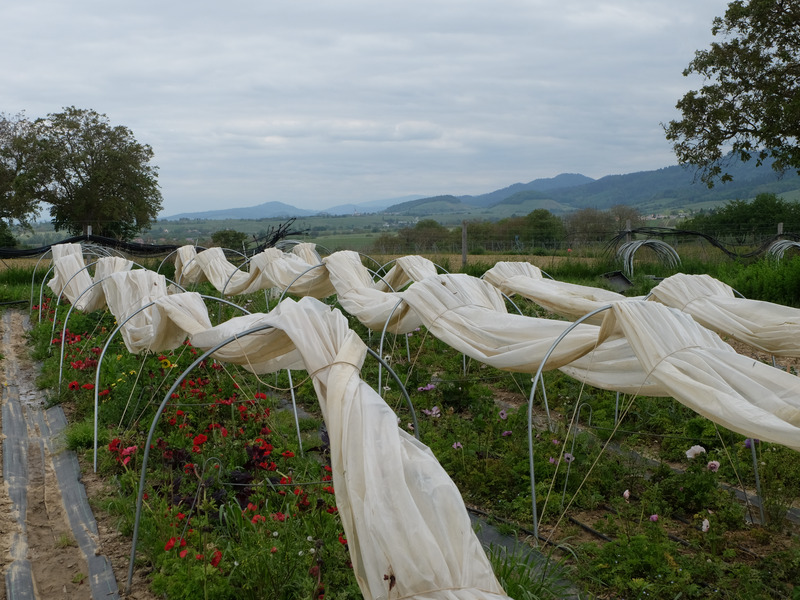
Low tunnels are simple and affordable structures consisting of hoops covered with clear plastic film and placed directly above the crop rows. They protect crops from wind, frost and heavy rainfall as well as raise soil and air temperatures during cooler months. Although they are not climate-controlled, they create a microclimate that is beneficial for the early and extended production of crops, particularly leafy greens and herbs, in organic systems. Because they do not match the BIOGREENET definition, they are not a part of our work at BIOGREENET.
Caterpillar tunnels/field tunnels
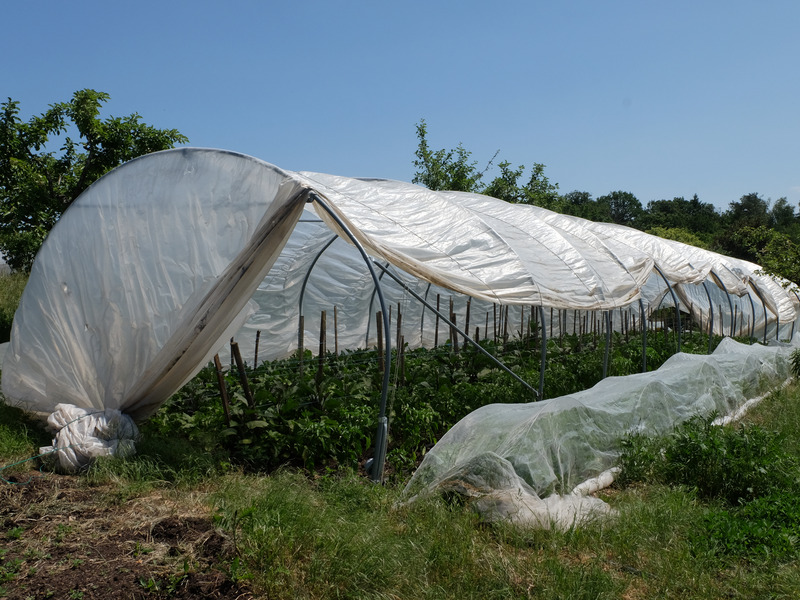
These tunnels look like giant caterpillars. Thereof is the name. They are the most basic form of protected growing which you can walk in. The set up is modular and can be changed from season to season if needed. Basically, you have hoops you put a plastic film over and tie it up with ropes. They are widely used to get a headstart in the season (strawberries f.e.) but can also function as a cheaper alternative to a classic plastic tunnel, depending on the context.
Plastic tunnels

Plastic tunnels, also known as walk-in tunnels or hoophouses, are semi-permanent structures that offer more headroom and ventilation than low tunnels. Constructed with a steel frame and polyethylene cover, they are easy to build and maintain. These tunnels enable better airflow and can support trellised crops such as tomatoes or cucumbers. Although they are still low-tech, they offer good protection from pests and weather.
Polyhouses
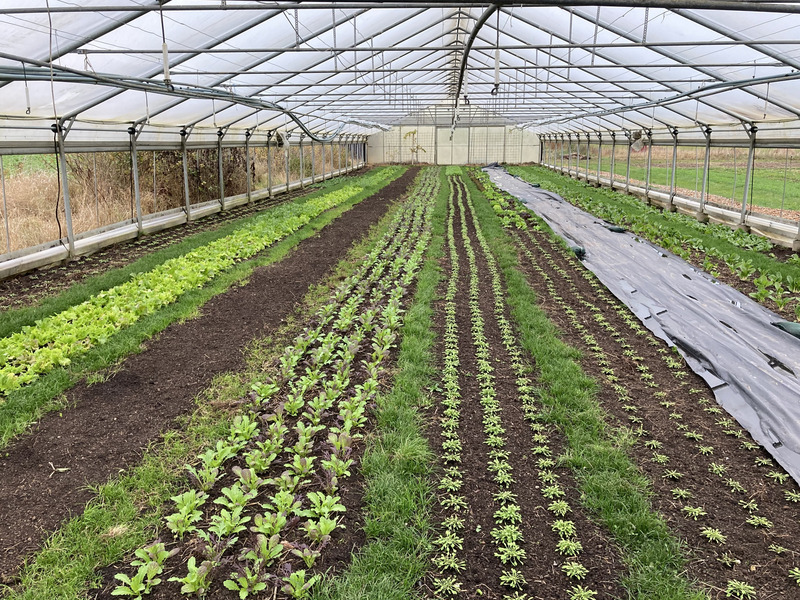
Polyhouses are large, high-tech greenhouses covered with UV-stabilised plastic film. They offer a much higher level of environmental control thanks to features such as drip irrigation, passive or active ventilation and shading systems. In organic production, they enable the intensive cultivation of high-value crops year-round while conserving water and nutrients. Polyhouses are ideal for producers seeking higher yields and better crop quality without the use of chemicals. Depending on the production company, they can also be added together to enable big, protected cropping structures without having to use a glasshouse (see below).
Glasshouses

Glasshouses are state-of-the-art facilities offering full control over the growing environment, including temperature, light, humidity and CO₂ levels. Built with glass panels and automated systems, they enable precise organic crop management under stable conditions. Although they are the most expensive option to build and operate, glasshouses are ideal for organic producers targeting premium markets and looking to supply produce consistently throughout the year.
Other varieties of greenhouses
Of course, this list is not a full picture of all kinds of greenhouses that exist. It is rather an attempt to give orientation in the greenhouse-landscape. Two examples of greenhouse-categories that are not used as often and therefore not well known are moveable greenhouses and passive-solar-greenhouses.
Moveable greenhouses are built on tracks or with some sort of wheels, to make them moveable. Like this they can be moved along with the crop rotation. Through that it is possible to use growing space more efficiently and to diversify the crop rotation in the greenhouse.
Passive-solar-greenhouses use the sun energy in combination with natural energy storages to enable a more efficient growing inside. They have a high opaque surface towards the South and a solid wall with energy-storing capacities in the North. Sometimes they are integrated in an ascending landscape, to use earth as storing material. Like this it is possible to maintain relatively high temperatures across the whole year with minimal heating. They are not used very widespread in Europe, but there are regions in the world, where they are more widely used. For example, in China.
 tap and then scroll down to the Add to Home Screen command.